Most founders, CEOs, and personal brands eventually hit the same wall. Their face is the brand, but their time is the bottleneck. They cannot film a new video every time the company needs an onboarding clip, an announcement, a localized version for a new market, or a fresh ad. The result is usually the same: video output drops, the founder shows up less, the brand loses the human face that made it work, and everyone settles for stock footage and bland voiceover.
There is a way out of that bottleneck now, and it is called custom likeness. We build these for clients as a service, and the use cases are getting more interesting every quarter. This piece is about what custom likeness gets you, where it fits, and what to think about before you build one.
What a custom likeness actually is
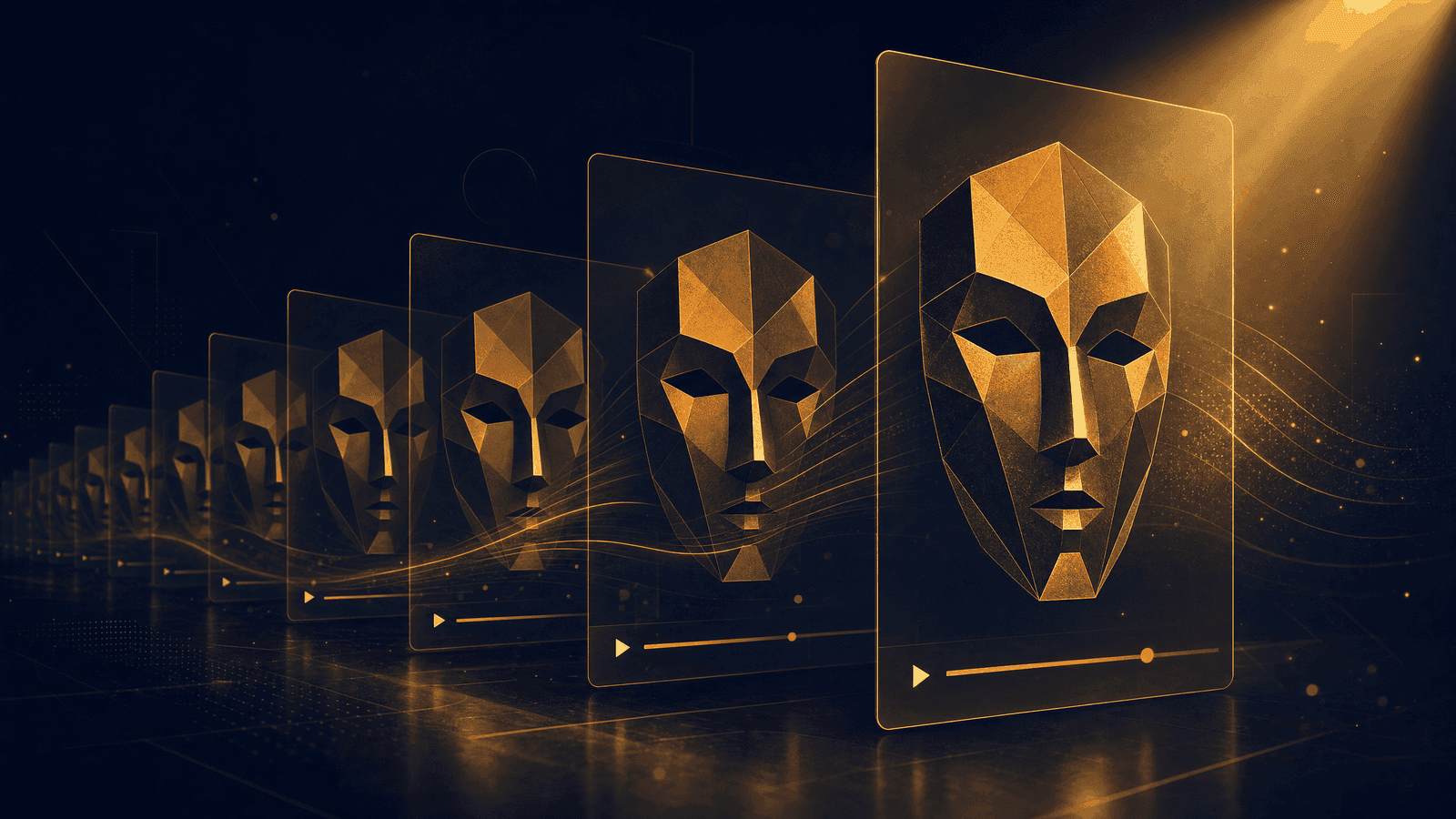
A custom likeness is a trained model of you specifically, your face, your voice, your mannerisms, that can produce new video of you saying things you never actually filmed. Once it is built, the cost of producing a new video featuring you drops to essentially zero in production time. You write the script, you direct the output, and the system delivers a clip of you delivering it.
The technology used to be obviously fake. It is not anymore. With proper training, the likeness is close enough that even people who know the founder personally cannot tell. We have shipped likeness videos for clients where their own team members watched the clip, then asked when the founder filmed it. They had not. The clip was generated.
That capability raises every question you would expect, ethical, brand, legal, which we will get to. But first let's talk about what people are actually using it for.
Real use cases we see
The traveling CEO who cannot stop being on camera. One client of ours runs a fast growing services company and is on the road four days a week. His marketing team needs him in video constantly: announcements, sales videos, training clips, internal updates. He used to block one full day every two weeks to batch film. Now he scripts and approves, and his likeness handles delivery. He films a real video maybe once a quarter for the moments that genuinely require it.
The founder scaling into new languages. A consumer brand we work with sells in seven countries. The founder is the face of the brand, but he only speaks English. Custom likeness lets him "speak" the local language in every market, with his actual face on camera and his actual voice characteristics carried over. Sales conversion in non English markets jumped meaningfully when they switched from generic spokespeople to localized versions of the founder. Trust transfers when the face stays the same.
The professional spokesperson scaling their availability. A health professional we work with had a wait list of brands wanting her to do educational content. She could only film so many days a year. Building her likeness, with strict rules about what scripts she would approve, multiplied her availability without making her hate her own schedule.
The personality producing volume. Personal brands that depend on volume, daily videos, weekly drops, ad creative at scale, used to either burn out or hire a team to fake their style. Custom likeness lets the personality stay genuinely on camera at volume that humans alone cannot match.
What the outcomes look like
The pattern is consistent across clients. Video output goes up by a factor of five to twenty. Filming time drops by ninety percent. New formats that were too expensive to attempt, weekly newsletter intros, customer specific video messages, localized versions of every ad, become trivial to ship. The founder's face stays on the brand without the founder's calendar getting destroyed.
The other outcome, less obvious, is creative iteration. When filming a new video means scheduling a day in a studio, you take fewer creative risks. When generating a new video is a script change away, you test more, you fail more, and you find what actually works faster.
The risks and the rules
This is where I have to be direct, because custom likeness is a tool that can be misused and the misuse is real.
Consent is non negotiable. A likeness should only ever be built of someone who explicitly agreed to it, in writing, with clear understanding of what it will be used for. We do not build likeness models of people without their direct involvement. Period.
Brand control matters more than you think. Once a likeness exists, somebody has to control what scripts it can run. We always set up an approval workflow so the person whose face it is, or a designated team, signs off on every clip before it ships. The horror story is a likeness model running off and producing content the person never approved. The guardrails prevent that, and they need to be set up from day one.
Disclosure depends on context. For ads, internal training, or content where the audience already understands the founder is the spokesperson, disclosure may not be required. For content where viewers might reasonably believe the founder spoke specific words on a specific date, you disclose. The line moves with the use case, and we talk it through with every client before the first clip ships.
Voice cloning is its own conversation. Voice is often more sensitive than face. The same rules apply: consent, control, disclosure where appropriate. We treat voice as a separate decision, not a default add on.
When this is the right move
Custom likeness is the right move when your face is the brand and your filming time is a constraint. If you are a founder, executive, or personality whose content depends on you being on camera, and you are turning down video opportunities because you cannot film fast enough, this changes that equation.
It is the wrong move if your brand is not personality led, or if the volume of video you need is low enough that filming is not a bottleneck. Do not build a likeness because it is cool. Build one because the math of your time versus your content needs no longer works without it.
How we do this for clients
We handle the build, the consent and rights documentation, the approval workflow, and the ongoing production. The person whose face it is stays in control of what gets made. Their team gets a tool that produces on demand video featuring them. Our team handles the technical work and the guardrails.
If you want to scale your face without scaling your filming schedule, that is a conversation worth having. We offer a free discovery call where we walk through your situation, your content goals, and whether a custom likeness actually fits your business. If it does not, we will say so. If it does, you will understand exactly what you are getting and exactly what the guardrails are before anything is built.